Cleopatra VII’s enduring legacy is often overshadowed by her legendary beauty, yet beneath that surface lies a story of extraordinary intelligence, diplomacy, and strategic mastery. This portrayal reveals a ruler who understood that true power resides not just in physical allure but in the power of the mind—her fluent languages, scholarly pursuits, and cultural diplomacy provided her with unmatched influence. Her mastery of religious symbolism, political alliances with Rome’s top leaders, and patronage of knowledge centers like the Library of Alexandria showcase a leader who combined tradition with innovation. Cleopatra’s resilience in navigating turbulent political waters, her ability to adapt swiftly, and her keen strategic foresight underscore her as a model of leadership rooted in wisdom and cultural insight. Could her real legacy be the profound strength of her intellect? This compelling portrait challenges us to reconsider history’s fascination with her allure, emphasizing that her true power was built on the extraordinary capacity of her mind.
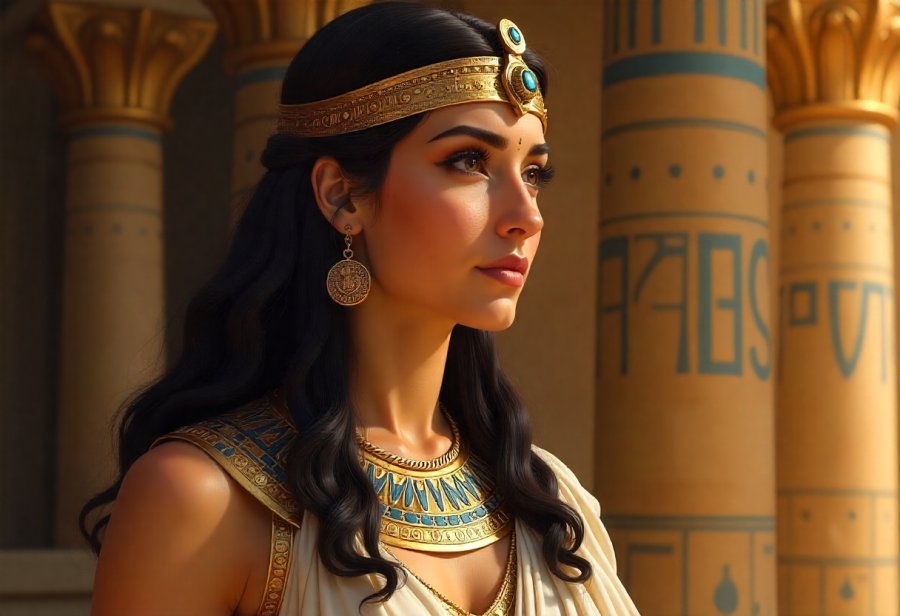
Unveiling Cleopatra: Beyond Beauty to Strategic Brilliance
Cleopatra VII’s reputation often centers on her beauty and allure, but beneath that surface lies a far more impressive story—one of sharp intelligence and strategic mastery. She was a ruler who understood that true power came from knowledge, diplomacy, and cultural insight. Her ability to speak multiple languages fluently, including Egyptian, Greek, and Latin, gave her a significant edge in negotiations and diplomatic relations. This linguistic skill wasn’t just a party trick; it was a deliberate tool to shape alliances and influence outcomes.
Her scholarly pursuits further underscore her intellectual prowess. Cleopatra was deeply engaged with fields like mathematics, astronomy, and philosophy, not merely out of curiosity but as part of her larger strategy to legitimize her authority. She supported the Library of Alexandria, fostering an environment of learning and scientific exchange that elevated Egypt’s reputation as a hub of knowledge. By surrounding herself with learned advisors and scholars, she built a cultural foundation that reinforced her leadership and helped her navigate the complex political landscape.
This emphasis on education and cultural diplomacy was complemented by her ability to adapt Egyptian traditions with Hellenistic influences. She understood that blending these elements would broaden her appeal and strengthen her legitimacy among a diverse population. Her multilingualism, scholarly interests, and cultural sensitivity weren’t just personal traits—they were vital aspects of her leadership toolkit, enabling her to maintain control amid internal unrest and external threats.
Cleopatra’s intelligence was also evident in her strategic marriages and alliances, especially with Rome’s Julius Caesar and Mark Antony. These moves weren’t based on sentiment but on calculated political necessity. Her ability to read her environment, leverage symbolism, and craft relationships that served her kingdom’s interests cemented her reputation as a leader who prioritized strategic thinking above all else.
In looking beyond her legendary beauty, we see Cleopatra as a leader who understood that power rooted in the mind can endure far longer than fleeting charm. Her story is a testament to how knowledge, adaptability, and strategic foresight can shape a legacy that lasts through centuries—an inspiring lesson for leaders in any era.
The Power of the Mind: Cleopatra’s Intellectual Prowess
Cleopatra’s reputation as a highly educated and sharp leader is backed by her extraordinary linguistic skills and broad scholarly interests. Fluent in Egyptian, Greek, Latin, and likely several other languages, she could communicate directly with diplomats, scholars, and foreign leaders, giving her a powerful diplomatic advantage. This ability to speak multiple languages wasn’t just a display of talent; it was a strategic tool that allowed her to negotiate, build trust, and influence across cultures without relying on interpreters.
Her dedication to learning extended beyond languages. Cleopatra immersed herself in mathematics, astronomy, philosophy, and rhetoric—fields highly valued in her court. These pursuits weren’t merely personal hobbies but deliberate efforts to reinforce her authority and deepen her understanding of the world. Surrounding herself with learned advisors and scholars, she fostered a vibrant culture of knowledge, elevating Egypt’s reputation as a center of intellectual excellence.
Supporting the Library of Alexandria was another testament to her commitment to scholarship. She recognized that promoting science, philosophy, and literature would bolster Egypt’s prestige and her legitimacy. By investing in these centers of learning, she positioned herself as a ruler who valued wisdom and innovation, using knowledge as a foundation for her leadership.
Balancing Egyptian traditions with Hellenistic influences showcased her cultural agility. She respected religious customs that reinforced her divine status while embracing Greek ideas to appeal to her diverse population. This adaptability was a key part of her strategic thinking, allowing her to unite her people and project strength externally.
Cleopatra’s strategic marriages to Julius Caesar and Mark Antony further demonstrated her intelligence. These alliances were carefully planned, using her language skills, cultural insights, and political acumen to forge relationships that secured Egypt’s independence and her personal power. Her scholarly pursuits and multilingualism were essential tools in crafting these influential partnerships.
Her intellectual agility wasn’t confined to her court or diplomatic efforts; it was a core part of her leadership identity. Cleopatra understood that knowledge and cultural diplomacy could be just as powerful as armies or wealth. Her ability to adapt, learn, and leverage ideas made her a formidable ruler—one whose strength lay in her mind.
In the end, Cleopatra’s true power stemmed from her relentless pursuit of knowledge and her strategic application of that knowledge in governance. Her legacy isn’t just one of beauty or romance but of a ruler whose intellect shaped history. Her example reminds modern leaders that investing in learning and cultural understanding can forge resilience and influence that last through ages.
Leadership and Diplomacy: The Art of Strategic Alliances
Cleopatra’s diplomatic skill was essential to her survival and influence in a turbulent era. She approached alliances with Rome’s top leaders, Julius Caesar and Mark Antony, with a clear strategic mindset. Her relationship with Caesar went beyond romance; it was a calculated move to restore stability after internal struggles. Supporting Caesar’s military campaigns and securing his backing through marriage strengthened her position and helped legitimize her reign. This alliance not only reinforced her authority in Egypt but also gave her influence within the expanding Roman sphere.
Her bond with Mark Antony built on the foundation she laid with Caesar. Recognizing the importance of maintaining a strong relationship with Rome’s most powerful figure, Cleopatra cultivated a partnership that balanced personal rapport with political purpose. She navigated the complex Roman landscape with finesse, using charm, symbolism, and impeccable timing to keep her independence intact. Her diplomatic agility often turned potential enemies into allies, helping her preserve her kingdom amid external pressures.
Her Macedonian heritage influenced her approach to diplomacy, instilling a tradition of cunning and political maneuvering. Cleopatra was adept at reading her environment, leveraging symbolism, and executing subtle power plays. These skills allowed her to manipulate rival factions and secure her throne, demonstrating her ability to combine tradition with innovation. Her strategic use of religious rituals and cultural symbols reinforced her legitimacy, both at home and abroad.
Supporting her political moves, Cleopatra championed Alexandria’s intellectual hub, the Library of Alexandria. By backing scholarship and scientific exchange, she bolstered Egypt’s cultural prestige and her own authority. This cultural diplomacy complemented her political strategies, making her a leader who understood that knowledge, symbolism, and timing could be as powerful as military strength.
Throughout her reign, Cleopatra balanced Egyptian religious traditions with Hellenistic influences, using religious rituals and symbols to legitimize her authority. This cultural flexibility helped her maintain internal stability and project strength externally. Her mastery of diplomacy—blending tradition with modern strategy—made her one of history’s most resilient and influential leaders.
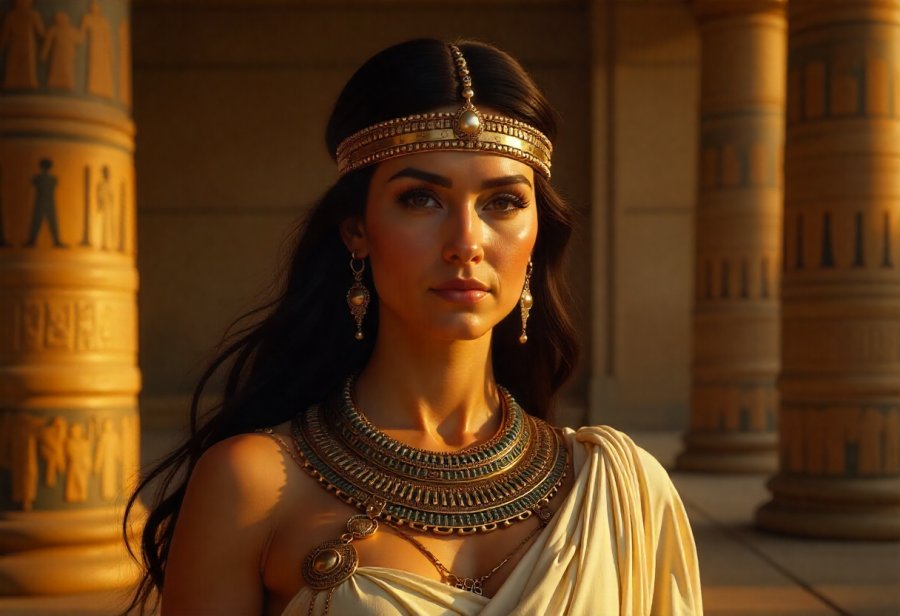
Her True Power: The Pharaoh’s Authority Embedded in Divinity
Cleopatra’s leadership was deeply rooted in her understanding of divine authority and political power, blending religious symbolism with shrewd governance. As a pharaoh, she embraced her role as a divine ruler, believing her legitimacy was rooted in sacred tradition. She carefully used religious icons, such as the Uraeus cobra, and participation in sacred rituals to project strength and divine favor. These symbols weren’t just ceremonial; they served as visual reminders that her authority was sanctioned by the gods, helping her garner loyalty and respect from her subjects.
Yet, Cleopatra knew that spiritual legitimacy alone wouldn’t secure her reign. She combined her divine persona with pragmatic diplomacy and strategic political decisions. Religious festivals, inscriptions, and temple patronage reinforced her image as a living deity, creating a sense of stability amid internal unrest and external threats. Her ability to embody divine authority while governing with a sharp political mind made her leadership resilient and multifaceted.
She also positioned herself as the guardian of Egypt’s spiritual and cultural heritage, embedding her authority in longstanding religious traditions. Supporting temples and religious ceremonies not only cemented her divine status but also fostered loyalty among her people. This seamless integration of religion and politics elevated her beyond mere monarchy, transforming her into a semi-divine figure whose influence extended well beyond her lifetime.
When engaging with powerful outsiders like Julius Caesar and Mark Antony, Cleopatra projected her divine image to command awe and allegiance. She understood that her divine symbolism was a diplomatic asset, strengthening her alliances and intimidating rivals. Her mastery lay in weaving these elements together—religion, culture, and politics—creating a leadership style that was both inspiring and practically effective.
This strategic use of divine imagery was not just tradition; it was a calculated tool to maintain control and legitimacy. Cleopatra’s ability to balance sacred symbolism with realpolitik allowed her to navigate complex geopolitical landscapes. Her divine authority was a cornerstone of her leadership—an enduring symbol that reinforced her power across Egypt and beyond, ensuring her legacy as a ruler who understood that true power resides in the mind and spirit as much as in the sword.
Her Enduring Legacy: Lessons in Leadership and Resilience
Cleopatra’s leadership offers timeless lessons for today’s leaders, especially in the realms of intelligence, diplomacy, and resilience. Her ability to adapt swiftly to shifting political landscapes highlights the importance of flexibility and perceptiveness in maintaining influence. She understood that leadership isn’t solely about authority; it’s about reading situations accurately and responding with strategic insight. Her alliances with Rome’s top figures weren’t driven by vanity but by calculated moves to secure her kingdom’s stability and future.
Her diplomatic finesse stemmed from cultural sensitivity and impeccable timing. Cleopatra knew how to blend Egyptian traditions with Hellenistic influences, appealing to diverse audiences and earning loyalty across different groups. Her marriages to Julius Caesar and Mark Antony weren’t just personal choices—they were strategic acts that reinforced her position and extended her reach. Her mastery in turning potential threats into opportunities exemplifies how symbolism and diplomacy can be powerful tools for influence.
Resilience stands out as a core trait in her leadership. Despite relentless external pressures from Rome and internal rivalries, Cleopatra refused to be overwhelmed. Instead, she employed strategic thinking and innovation—strengthening alliances, supporting cultural institutions like the Library of Alexandria, and maintaining her authority through constant adaptation. Her perseverance demonstrates that mental toughness and the willingness to evolve are vital when circumstances grow increasingly challenging.
Her story underscores that true influence depends on intellectual strength and strategic vision. Her multilingualism, scholarly pursuits, and support for learning weren’t just personal interests—they were essential tools for shaping her legacy. Leaders who prioritize understanding, education, and relationship-building can forge a resilient and lasting impact, much like Cleopatra’s enduring example.
Her legacy reminds us that the greatest power resides within the mind. The ability to think ahead, adapt swiftly, and cultivate alliances through cultural insight created a influence that has lasted centuries. Cleopatra’s example encourages modern leaders to invest in their intellect and resilience, recognizing these qualities as the foundation for lasting influence in even the most turbulent times.
Beyond her romanticized image, Cleopatra’s leadership was rooted in strategic intelligence. Her capacity to navigate complex political and cultural terrains, support scholarly endeavors, and forge vital alliances underscores a mindset focused on long-term stability. Her legacy shows that sustainable power comes from cultivating wisdom, adaptability, and a keen understanding of human nature.
Keep in mind that leadership shaped by knowledge and resilience can transcend eras. Cleopatra’s ability to combine cultural diplomacy with strategic foresight demonstrates that influence built on the mind is both enduring and transformative. Her example inspires today’s leaders to prioritize intellectual agility and emotional resilience, essential qualities for navigating today’s unpredictable landscape.
Expert Insights: Scholars and Historians on Cleopatra’s Genius
Historians and scholars have long recognized Cleopatra’s leadership as a remarkable blend of intelligence and strategic insight. Many emphasize that her ability to navigate the complex political landscape of Egypt and Rome wasn’t just luck but a sign of her sharp mind. Classicist Mary Beard highlights her mastery of cultural diplomacy, noting how she carefully used symbols, language, and alliances to strengthen her position. She argues that Cleopatra’s multilingual skills and her deep understanding of Egyptian and Greek traditions gave her an edge over rivals who relied solely on force or brute political power.
Egyptologist Joyce Tyldesley points out that Cleopatra’s scholarly pursuits—her interest in philosophy, astronomy, and mathematics—are clear evidence of her intellectual depth. These interests weren’t just personal hobbies but strategic tools she used to legitimize her rule and foster loyalty. Scholars like Stacy Schiff have also noted her mastery of timing and symbolism, which she used effectively in her alliances with Julius Caesar and Mark Antony to project strength and authority.
Modern analysts reinforce the idea that her diplomacy was rooted in cultural sensitivity. Cleopatra knew how to appeal to diverse audiences, blending Egyptian religious symbols with Hellenistic influences to reinforce her legitimacy. Her patronage of the Library of Alexandria, supporting scholars and scientists, underscored her understanding that knowledge was power. Such moves demonstrated her awareness that investing in cultural and intellectual centers could bolster her influence far beyond mere politics.
Some critics have argued that her reliance on personal relationships and alliances was a weakness, suggesting her political acumen was limited. Yet, most scholars agree that her ability to forge and maintain these relationships was a testament to her strategic brilliance. Her decisions to align with Rome’s top leaders were calculated risks that ultimately secured her kingdom’s survival, proving her leadership was rooted in intelligence and foresight.
Her resilience in facing external threats from Rome and internal rivalries showcases her mental toughness. Cleopatra’s career was marked by constant adaptation—shaping her alliances, fostering learning, and leveraging symbolism—traits that many modern leaders could learn from. These qualities reinforced her reputation as a ruler who prioritized wisdom and strategic thinking over brute force.
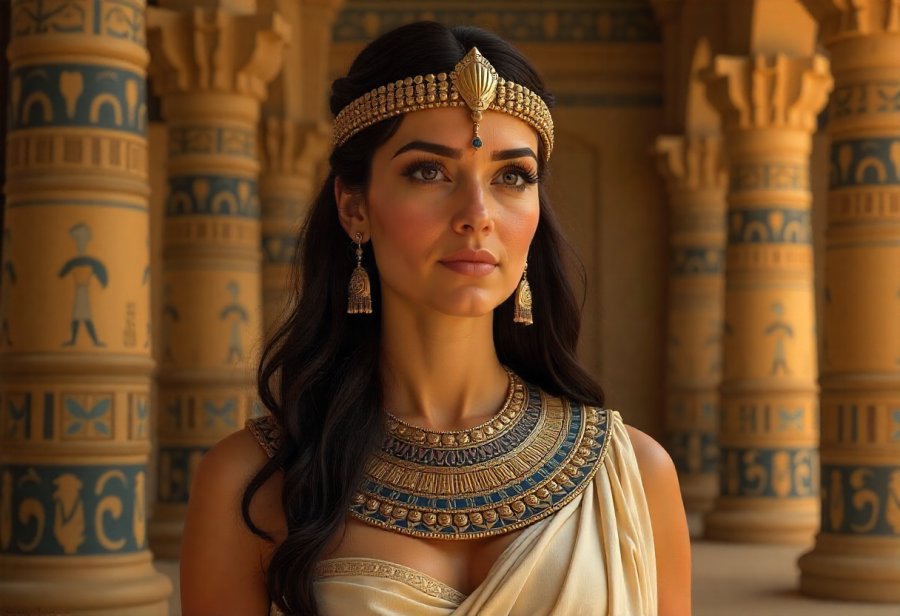
The Lasting Impact: How Cleopatra’s Mind Shaped History
Cleopatra’s true legacy lies in her exceptional mind and strategic insight, qualities that have outlasted her legendary beauty and romanticized image. Her mastery of multiple languages, dedication to learning, and keen understanding of political dynamics made her a formidable leader in a turbulent world. These skills allowed her to forge powerful alliances, influence influential figures like Julius Caesar and Mark Antony, and preserve Egypt’s independence despite mounting external pressures.
Her support for the Library of Alexandria and her cultivation of scholarly pursuits underscored her belief that knowledge was a vital source of power. Cleopatra recognized that influence stemmed from ideas, culture, and relationships, not just wealth or charm. By blending Egyptian religious symbols with Hellenistic traditions, she crafted a leadership style that resonated across diverse audiences and reinforced her legitimacy.
Resilience and adaptability defined her reign. Facing relentless threats from Rome and internal rivalries, Cleopatra responded with strategic marriages, diplomatic finesse, and cultural patronage. Her ability to think ahead and respond swiftly transformed crises into opportunities, ensuring her survival and influence. Her leadership exemplifies how mental agility and resilience can shape a lasting legacy.
Her story reminds us that the greatest power resides in the mind. Cultivating intelligence, cultural awareness, and strategic vision creates an influence that endures through centuries. Cleopatra understood this implicitly and demonstrated that true leadership is rooted in wisdom and adaptability. Her example continues to inspire modern leaders to prioritize intellectual strength and resilience in navigating complex challenges.
Far beyond her romanticized image, Cleopatra’s leadership was a masterclass in strategic thinking and cultural diplomacy. Her legacy teaches that lasting influence is built on knowledge, perception, and the courage to adapt. By investing in her mind and spirit, she cemented a place in history as one of the most astute and resilient rulers the world has ever known.