In an era where business communication is vital to competitive edge, how can organizations harness customizable telephony solutions to revolutionize their networks? Grandstream’s innovative devices, like the robust GRP series IP phones, exemplify this shift, offering high-quality, scalable hardware supported by a centralized cloud management platform. These solutions simplify deployment, enhance security, and foster seamless integration with CRM and analytics tools, transforming traditional calls into dynamic, strategic assets. But as companies expand and adapt, does their infrastructure possess the flexibility to keep pace? This comprehensive overview explores the evolution from landlines to intelligent, cloud-driven systems, revealing how tailored telephony not only streamlines workflows but future-proofs operations. With features designed for remote work and rapid growth, Grandstream’s solutions inspire organizations to embrace a smarter, more responsive communication environment—one that unlocks operational efficiencies and elevates user experience in a rapidly connected world.
Transform Your Business Communications with FiberConX’s Advanced VoIP Solutions
Discover how FiberConX Communications, based in Canada, is revolutionizing business communication with their comprehensive VoIP and IP phone services. From seamless voicemail and voicemail-to-mail features to customizable IVR and Ring Groups, FiberConX ensures your team stays connected and efficient. Their solutions are designed to enhance customer interactions and streamline your operations. Whether you’re looking to upgrade your existing system or implement a new communication strategy, FiberConX offers reliable and scalable services tailored to your needs. Contact their expert team at [email protected] or call 1.800.961.6856 to learn more. Explore the benefits of their GRP2634 program today!
Transform Your Business Communication with Customizable Telephony Solutions
In today’s fast-moving business landscape, effective communication isn’t just a convenience—it’s a strategic necessity. Companies that can connect internally and with customers smoothly gain a clear edge over competitors relying on outdated or rigid phone systems. Traditional landlines, often limited by hardware and inflexible features, can slow down workflows and frustrate users. That’s why many organizations are turning toward customizable telephony solutions that adapt to their unique needs, making every call more purposeful and efficient.
Modern telephony systems do much more than just facilitate voice conversations. They’re building blocks of a comprehensive communication ecosystem tailored to a company’s specific operations. Features like intelligent call routing, auto-attendants, and CRM integration streamline interactions, reduce wait times, and ensure that callers reach the right person quickly. When systems are designed around your workflows, they become tools that enhance productivity and elevate customer satisfaction—key drivers of growth and loyalty in today’s customer-centric world.
The shift toward cloud-based platforms has revolutionized how businesses deploy and manage these solutions. Cloud-managed telephony enables administrators to configure, update, and troubleshoot devices remotely from a centralized dashboard. This flexibility simplifies scaling—adding new users or locations often takes just a few clicks—and minimizes disruption. As organizations grow or pivot, their communication infrastructure can evolve seamlessly, supporting new workflows without costly hardware overhauls. This adaptability makes customizable telephony not just a convenience but a vital asset for future-proofing business operations.
Remote and hybrid work models have further underscored the importance of tailored communication systems. Employees spread across various locations need reliable, feature-rich tools that work just as effectively outside the office as they do on-site. Cloud solutions and IP-based devices ensure teams stay connected, collaborate efficiently, and access critical features regardless of their physical environment. This flexibility not only keeps communication flowing but also reduces the need for extensive hardware deployment, saving time and resources while supporting modern work paradigms.
Beyond basic voice calls, modern telephony systems are designed for deep integration with other business tools. Whether connecting with CRM platforms, helpdesk software, or analytics dashboards, these solutions enable a unified approach to customer engagement and internal coordination. For example, a customer service agent can access caller history instantly or transfer calls smoothly within their existing workflows. Such integrations improve response times, personalize interactions, and create a seamless experience that strengthens relationships and builds trust.
Choosing a customizable telephony system means investing in a tool that evolves with your business. It’s about creating a communication environment that is as flexible and dynamic as your organization itself. By embracing features like cloud management and scalable endpoints—such as Grandstream’s range of IP phones—you set the stage for long-term growth, operational agility, and a superior user experience. In a world where staying connected is more critical than ever, tailored solutions ensure your business remains responsive, efficient, and ready for whatever comes next.

Tracing the Evolution of Business Communication Systems: From Landlines to Cloud Infrastructure
Business communication systems have come a long way from the days when landline phones were the primary means of voice communication. Initially, organizations relied on analog copper wires to carry simple voice signals, which served basic needs but offered little flexibility or scalability. As technology advanced, digital systems replaced these analog setups, providing clearer calls and more features. However, they still depended heavily on physical hardware and local infrastructure, which limited how quickly and easily companies could adapt their communication tools to changing demands.
The major turning point in business telephony came with the rise of Internet Protocol (IP) based systems, known as VoIP. This technology allowed voice data to travel over the internet instead of dedicated phone lines, making it possible to expand and customize communication solutions more affordably. Organizations could now implement advanced features like call forwarding, voicemail, and auto-attendants without extensive hardware upgrades. This shift opened the door for more integrated workflows, enabling businesses to create communication environments that better aligned with their operational needs.
Cloud-managed telephony took these innovations even further by offering centralized control over a wide array of devices. These platforms enable administrators to configure, update, and troubleshoot remotely from a single dashboard, reducing deployment times and minimizing the need for on-site support. With cloud management, scaling up—adding new users or locations—becomes straightforward, often just a matter of clicking a few options. This flexibility supports rapid growth and adaptation, allowing companies to expand their communication networks without significant hardware investments or disruptions.
Understanding this evolution highlights why modern telephony solutions are so much more than just phones. Today’s systems support multimedia interactions, real-time analytics, and seamless integration with other business tools. These features enable organizations to operate more efficiently, deliver better customer service, and respond quickly to market shifts. The focus has shifted from simple voice calls to creating comprehensive communication ecosystems that serve as strategic assets, driving productivity and customer satisfaction alike.
Personalization and scalability have become central to effective communication. Instead of forcing workflows into rigid systems, companies now tailor their telephony environments to support specific processes. Call routing can be optimized to direct customers instantly to the right department, and integrations with CRM or helpdesk platforms streamline workflows. This level of customization reduces wait times, improves response quality, and enhances internal collaboration, making communication more intuitive and responsive across all levels of the organization.
The journey from analog landlines to sophisticated, cloud-managed telephony reflects a broader trend toward smarter, more flexible networks. Recognizing these developments helps organizations appreciate the importance of investing in adaptable, integrated solutions. Building on these foundations allows businesses to create communication systems that evolve with their needs, supporting long-term growth, operational agility, and a competitive edge in an increasingly connected world.
Harnessing Modern Telephony Solutions to Boost Business Efficiency and Customer Engagement
Modern businesses are increasingly turning to customizable telephony solutions to meet their ever-evolving communication demands. These systems offer the flexibility to tailor features like call routing, auto-attendants, and CRM integration, which help streamline workflows and elevate customer experiences. Cloud-managed platforms and IP-based devices enable rapid deployment and effortless scaling, making it easier for organizations to adapt as they grow or shift strategies. This agility ensures that communication infrastructure remains aligned with business needs, supporting seamless expansion without the hassle of hardware replacements or complex reconfigurations.
Managing these advanced systems has become more efficient thanks to centralized control platforms. Cloud management tools allow administrators to configure, monitor, and update hundreds or thousands of endpoints remotely. This centralized approach reduces deployment times and minimizes the need for on-site technical support, saving both time and resources. As companies expand or open new locations, adding users or features becomes a simple process, often just a few clicks, ensuring that the communication network grows in tandem with the business.
The quality of communication has also seen significant improvements. Today’s IP phones and cloud systems support high-definition audio, ensuring clear, professional calls. Features like programmable keys, presence indicators, and soft keys enhance user productivity and ease of use. Network management tools prioritize voice traffic through Quality of Service (QoS) settings, maintaining call clarity even during peak data loads. This focus on performance and security guarantees reliable, high-quality communication, which is vital for customer interactions and internal collaboration alike.
Integration with other business tools is another key advantage. Modern telephony solutions seamlessly connect with CRM systems, helpdesk platforms, and analytics dashboards. For instance, customer service teams can access caller history instantly or transfer calls within their existing workflows without disruption. These integrations reduce manual effort, speed up response times, and enable more personalized interactions, strengthening customer relationships and fostering loyalty. This interconnected approach turns communication systems into strategic assets that support overall business agility.
The shift toward personalized, scalable telephony isn’t just about technology—it’s a strategic move to enhance operational efficiency. Companies adopting these solutions position themselves to improve internal workflows, deliver faster, more tailored customer service, and respond swiftly to market changes. Devices like Grandstream’s IP phones exemplify this trend, providing reliable hardware that integrates seamlessly with cloud management platforms. This combination simplifies deployment, management, and expansion, making it easier to build a future-proof communication environment.
Looking ahead, the landscape of telephony solutions will continue to evolve with technological advances. Greater automation, predictive analytics, and AI-driven features will further customize and optimize communication workflows. The adoption of 5G and IoT devices will enhance connectivity and enable real-time, multimedia interactions at unprecedented levels. Businesses that stay ahead of these trends will be better equipped to respond quickly to customer expectations and market opportunities, maintaining a competitive edge.
Choosing the right hardware and management tools is crucial in this environment. Grandstream’s range of IP phones supports a new era of smart, flexible communication. Their devices are designed for high performance, security, and easy integration, providing a reliable backbone for any scalable telephony system. When combined with cloud management solutions like GDMS, these devices enable organizations to deploy, configure, and expand their networks with minimal disruption, ensuring consistent performance across multiple locations.
Ultimately, the current landscape offers businesses a wealth of opportunities to optimize and future-proof their communication infrastructure. Customizable telephony solutions allow for tailored workflows, improved customer engagement, and scalable growth. By leveraging innovative hardware like Grandstream’s IP phones and integrating them within cloud-managed environments, companies can build resilient, efficient, and adaptable networks that support long-term success in a digitally connected world.

Grandstream Devices and Solutions: Powering Scalable, Secure, and Future-Ready Networks
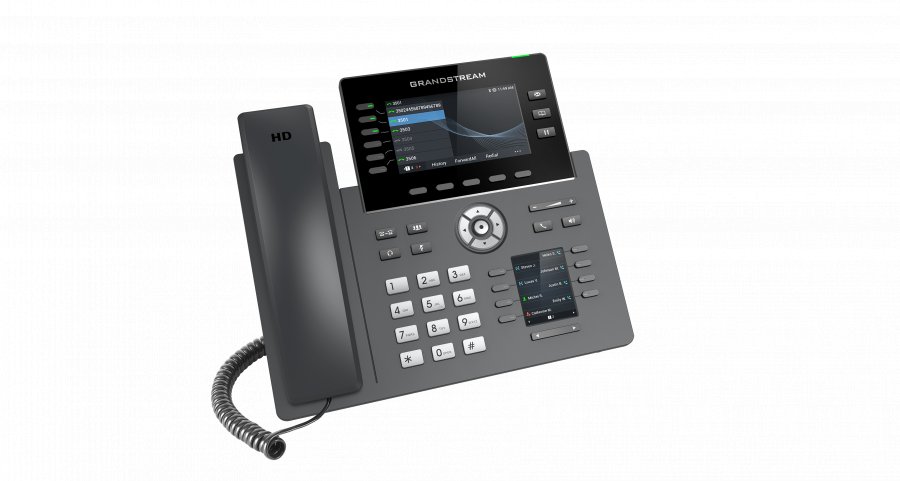
Grandstream offers a broad and versatile lineup of telephony endpoints designed to meet the diverse needs of modern organizations. Their flagship GRP series IP phones are trusted for their reliability, high-quality audio, and ease of deployment across various business sizes—from small offices to large-scale enterprise environments. These devices aren’t just about delivering crisp, professional voice calls; they are built with features that support seamless integration into cloud-managed networks, enabling centralized configuration, monitoring, and updates. This integration simplifies management, reduces downtime, and accelerates deployment, especially when scaling across multiple locations.
What makes Grandstream stand out is how their devices serve as the backbone of network transformation. Equipped with high-definition voice quality, programmable keys, and multi-line support, these phones empower users with customization options that enhance productivity and workflow efficiency. Security is also a priority—built-in encryption protocols and support for secure SIP signaling ensure that sensitive conversations remain protected. This combination of robust hardware and security features helps build a communication environment that is both flexible and resilient.
Beyond individual endpoints, Grandstream’s solutions are part of a comprehensive strategy to modernize enterprise networks. Their cloud management platform, GDMS, allows administrators to deploy, configure, and maintain thousands of devices remotely. This centralized control minimizes on-site support needs, reduces errors, and enables quick updates or changes to device settings. Whether adding new users or adjusting features, the process is straightforward, supporting rapid growth and operational agility. This scalable management approach ensures that the communication infrastructure evolves with the organization’s expansion without requiring costly hardware replacements.
The hardware itself is designed with future-proofing in mind. Grandstream’s IP phones support a wide range of SIP protocols and security standards, ensuring compatibility with existing network environments and safeguarding against evolving cyber threats. Features like high-definition audio, programmable soft keys, and presence indicators not only improve user experience but also streamline daily tasks. Employees can instantly access critical functions, transfer calls effortlessly, and stay connected regardless of their location, making these devices ideal for remote and hybrid work models.
Integration capabilities further extend the value of Grandstream’s solutions. Their phones can be paired easily with customer relationship management systems, helpdesk platforms, and analytics tools. For example, customer service teams can view caller information instantly or transfer calls smoothly within their workflow, without disruption. These integrations foster a more intuitive and efficient communication environment, enhancing both internal collaboration and customer interactions. The result is a unified ecosystem where every component works in harmony to boost operational performance.
In addition to hardware, Grandstream’s ecosystem supports a range of management and deployment tools designed to simplify large-scale network updates. Their cloud-based platforms enable centralized oversight, making it easier to monitor device health, perform firmware upgrades, and troubleshoot issues remotely. This level of control reduces operational overhead and ensures consistent performance across all endpoints, regardless of geographic spread. It also allows organizations to adapt quickly to changing business needs, launching new services or expanding their networks without delays.
The durability and reliability of Grandstream devices make them well-suited for demanding environments. Designed with quality materials and supported by extensive testing, these endpoints withstand daily use and deliver consistent performance. Their support for high-definition audio ensures clarity in every conversation, which is crucial for customer-facing roles and internal communications alike. Coupled with advanced security features, these devices provide peace of mind that your network remains protected against potential vulnerabilities.
Choosing Grandstream means investing in a future-ready communication infrastructure. Their devices are not only reliable and feature-rich but also easy to scale and manage through cloud platforms. This combination enables organizations to build tailored, flexible networks that grow with them, supporting long-term operational success. By integrating these endpoints into a comprehensive telephony strategy, businesses can unlock new levels of efficiency, responsiveness, and user satisfaction—key ingredients for thriving in today’s competitive landscape.